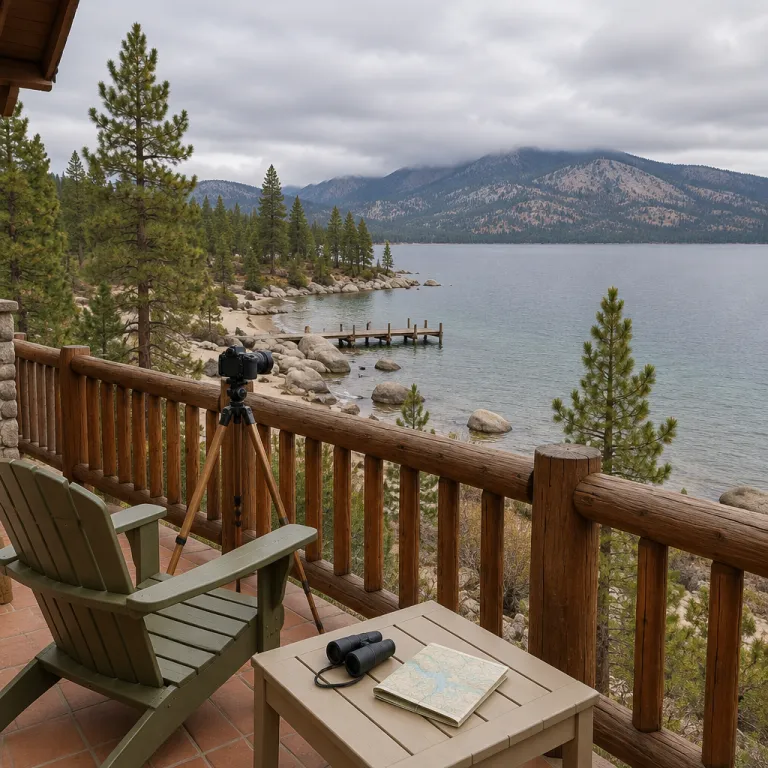
Why lakeside cabins and lodges suit serious Lake Tahoe photography
Lakeside cabins and lodges place you steps from the lake, which matters when you are chasing the best light and the most atmospheric Lake Tahoe photography spots. From a quiet deck above the water you can frame pre-dawn mist over the lake and Lake Tahoe peaks, then walk a few metres to the beach for wide-angle photos before other travel groups arrive. This close connection to the water also means you can react quickly when clouds shift, when a sudden sunrise flare appears, or when the wind drops and the lake surface turns mirror smooth.
Many lakeside lodges in North Lake Tahoe and South Lake Tahoe are oriented toward the best views, so you can scout compositions before you even leave your room. When you book, ask for a lake-facing room or cabin with an unobstructed bay or cove outlook, because this will influence your photography more than almost any amenity. A private stretch of beach or shared pier lets you work with foreground elements such as rock patterns, weathered timber, and reflections in shallow water, giving your photos depth that casual visitors rarely capture.
For guests focused on photography, the best time to stay in a lakeside cabin is usually outside peak summer weekends, when the parking lot at popular state park locations fills early and crowds spill onto every beach. Shoulder-season stays still offer clear water and emerald tones in the lake, but you gain quieter trails, easier access to sunrise viewpoints, and more flexible shooting time around each bay. When you can step from your lodge to the shore in minutes, you also reduce the stress of driving in pre-dawn darkness, which keeps you fresher for long hike days on routes such as the Flume Trail or Rubicon Trail.
Framing Emerald Bay from the waterline to Eagle Falls
Emerald Bay is the single most photographed bay on Lake Tahoe, and staying nearby lets you experience it beyond the standard roadside photo stop. From a lakeside lodge in South Lake Tahoe you can reach the Emerald Bay State Park viewpoints before the tour buses, then drop to the shoreline for low-angle photos of the water catching first light. This layered approach, from high views to water level, turns one location into several distinct Lake Tahoe photography spots in a single morning.
The classic composition looks east across Emerald Bay at sunrise, when the sky glows behind Fannette Island and the surrounding rock ridges, but the best views often come a little later when side light reveals texture in the forested slopes. Walk the Rubicon Trail along the bay’s shoreline to find quieter coves where you can use driftwood, boulders, and calm water as foregrounds, especially in early summer when the lake level is high. If you are staying in a cabin or hotel closer to South Lake Tahoe, plan extra time for the drive and for securing a space in the small parking lot above the bay, which often fills shortly after first light.
Do not miss Eagle Falls, just above Emerald Bay, where you can combine waterfall photography with sweeping lake panoramas. In spring and early summer the water volume is strongest, so use a tripod and slower shutter speeds to blur the flow while keeping the surrounding rock sharp. Guests who base themselves nearby can return in the evening for golden hour photos from the same trail, capturing warm light on the bay and cooler tones in the shaded forest, which gives you two very different photo sets from one compact area.
For more ideas on combining scenic viewpoints with comfortable stays, see this curated guide to a Lake Tahoe weekend getaway focused on lakeside hotels, which pairs overnight locations with nearby trails and coves. Matching your lodge choice to your preferred photography style, whether waterfalls, wide lake vistas, or intimate forest scenes, will shape how many strong photos you bring home. Emerald Bay rewards those who linger, so consider at least two nights nearby if this bay is a priority subject.
North Lake Tahoe: Sand Harbor, Bonsai Rock, and Secret Cove
North Lake Tahoe offers some of the clearest water and most sculpted granite in the region, which makes it ideal for photographers who love clean lines and bold colours. Sand Harbor in Lake Tahoe Nevada State Park is famous for its turquoise shallows, rounded rock formations, and wide beach, giving you multiple compositions within a short walk of the main parking lot. Arrive before sunrise to capture soft pastel light over the lake, then stay as the sun climbs to reveal the emerald and cobalt tones in the water that define many iconic Lake Tahoe photography spots.
A short drive from Sand Harbor brings you to Bonsai Rock, where a single tree clings to a boulder rising from the lake, creating one of the best views for minimalist photography. The descent to the shore is steep and rocky, so sturdy shoes matter, especially if you are carrying a tripod and camera bag for long-exposure photos at the waterline. From a lakeside cabin on the north shore you can time your visit for the best time of day, often blue hour after sunset when the sky glows and the water smooths into a reflective surface around the rock.
Secret Cove and nearby Chimney Beach offer quieter alternatives with equally striking water and rock formations, especially outside peak summer afternoons. The trail down to Secret Cove is short but can feel longer on the climb back, so plan your time carefully if you want both cove and beach photos before the light fades. Many photographers pair a morning at Sand Harbor with an evening at Bonsai Rock or Secret Cove, using a North Lake Tahoe base so they can rest at midday, recharge batteries, and review photos before heading out again.
If you prefer the intimacy of a cabin with direct access to the shore, consult this detailed guide on how to choose the best Lake Tahoe cabin for your trip. Selecting a cabin near these coves reduces driving time and lets you respond quickly when conditions align, such as unexpected cloud formations or perfectly still water. For many guests, that flexibility is the difference between a pleasant travel album and a portfolio of standout Lake Tahoe images.
South Lake Tahoe and Zephyr Cove: balancing comfort and classic views
South Lake Tahoe appeals to travellers who want strong photography opportunities alongside a full range of dining and entertainment, making it ideal if you are sharing a trip with non-photographers. From many lakeside hotels and lodges you can walk directly to the beach for sunrise, capturing the first light on the distant peaks while the water remains calm and the shoreline almost empty. These easy-access Lake Tahoe photography spots are perfect for days when you plan a longer hike later, because you can secure a few quality photos before breakfast without a long drive.
Zephyr Cove, a short drive from the main South Lake Tahoe cluster, offers wide open lake scenes with long sandy stretches and anchored boats that create strong focal points. The best time here is often early morning or late evening, when the sun sits low and side light sculpts the waves and sand patterns, while midday light tends to flatten the water and sky. Many guests book lakeside cabins or rooms near Zephyr Cove specifically so they can step out when the light looks promising, rather than committing to a fixed schedule that might not match the weather.
South Lake Tahoe also serves as a practical base for exploring Cave Rock, a prominent formation on the Nevada side that offers elevated views across the lake and surrounding peaks. From the short trail to the top you can frame both wide panoramas and tighter photos of the rock itself, especially at sunset when warm tones wrap around the formation. If you are deciding between North Lake Tahoe and South Lake Tahoe for your stay, this comparison of how to choose the best side of Lake Tahoe for your trip can help align your lodging with your preferred photography subjects.
Trails with the best views: Flume Trail, Rubicon Trail, and Monkey Rock
Some of the most rewarding Lake Tahoe photography spots require leaving the beach and committing to a hike, especially if you want elevated perspectives that reveal the full sweep of the lake. The Flume Trail above the east shore is renowned among mountain bikers, but hikers and photographers value it for its continuous lake panoramas and dramatic drop-offs. From various points along the trail you can frame the deep blue water, distant bays, and scattered rock outcrops, especially in late afternoon when the sun angles across the basin.
The Rubicon Trail, which traces the shoreline between Emerald Bay and Rubicon Point, offers a different style of photography, with constant access to the water and frequent openings in the forest. Here you can compose intimate photos of emerald shallows, polished rock, and overhanging pines, then step back for wider scenes that include the bay and surrounding cliffs. Because the trail hugs the lake, you can easily pause for long-exposure shots of waves washing over stones or for close-up studies of water clarity, which is one of the defining features of Lake Tahoe.
Monkey Rock, reached by a moderate hike from the Incline Village area, rewards effort with playful foreground interest and sweeping views across North Lake Tahoe. The carved rock that resembles a monkey provides a natural focal point for both wide and tight compositions, especially at sunrise when warm light hits the stone before the lake fully brightens. Staying in a nearby cabin or lodge allows you to start early enough to reach the viewpoint before the main crowds, giving you time to experiment with different lenses and angles without pressure.
Planning your stay around light, seasons, and practical logistics
Choosing where to sleep around Lake Tahoe directly shapes how often you can be in position for the best light, which is why serious photographers think first about sunrise and sunset rather than restaurant lists. In summer the days are long, so a lakeside cabin or lodge lets you rest between early morning and late evening sessions without wasting time on repeated drives around the lake. During quieter seasons you gain more flexible access to popular bays and coves, but you must also plan for shorter daylight and potentially colder conditions near the water.
For sunrise, locations such as Emerald Bay, Sand Harbor, and Zephyr Cove consistently rank among the best views because they face or partially face the rising sun, giving you colour in both sky and water. Sunset often favours west shore and certain South Lake Tahoe angles, though east shore spots like Bonsai Rock and Secret Cove can glow beautifully when clouds catch reflected light. The key is to match your lodging to at least one primary sunrise location and one sunset option, so you are never more than a short drive or walk from a strong composition when conditions align.
Practical details matter as much as creative ones, especially around state park access and parking. Many of the most popular Lake Tahoe photography spots sit inside or adjacent to a state park, where parking lots can fill quickly on clear summer days and weekends. Staying nearby reduces your reliance on limited spaces and allows you to arrive early, secure a safe spot, and focus on your photography rather than on circling for a place to leave the car.
Working with water, rock, and changing weather for memorable photos
The interplay of water and rock defines much of Lake Tahoe’s visual character, and understanding how light interacts with both will elevate your photography. Clear, calm water near beaches such as Sand Harbor, Chimney Beach, and Secret Cove reveals submerged boulders and emerald tones that respond beautifully to polarising filters and careful exposure. When wind rises and waves build, shift your focus to patterns in the water surface, backlit spray, and the way rock formations break the swell along the shore.
Granite outcrops like Bonsai Rock, Cave Rock, and the cliffs around Emerald Bay provide strong anchors for wide-angle compositions, especially when clouds add drama to the sky. Use these rock features as silhouettes at sunrise or as textured subjects in side light, and do not hesitate to return to the same spot at different times to see how changing conditions transform the scene. Many photographers staying in lakeside cabins keep a small kit ready by the door, so they can step out quickly when unexpected weather, such as a clearing storm, creates rare light.
Weather around the lake can shift faster than many first-time visitors expect, so flexibility is essential when planning your shooting schedule. A day that begins with clear skies over North Lake Tahoe might bring clouds and haze to South Lake Tahoe by afternoon, which is another reason to choose lodging that keeps you close to multiple bays and coves. By pairing thoughtful hotel or cabin choices with an understanding of how water, rock, and light interact, you give yourself the best chance of returning home with photos that truly reflect the character of Lake Tahoe.
Key figures for planning Lake Tahoe photography focused stays
- Lake Tahoe’s surface area is about 490 square kilometres, which means driving the full loop around the lake can take 3 to 4 hours with photo stops, so basing yourself near priority locations like Emerald Bay or Sand Harbor saves significant time.
- The maximum recorded depth of Lake Tahoe is approximately 501 metres according to the United States Geological Survey (USGS, 2024), and this depth contributes to the lake’s intense blue colour that many photographers seek to capture in wide-angle views.
- Summer water temperatures near the shore typically range from 15 to 20 degrees Celsius, which is cool but manageable for short wades when composing low-angle photos around rocks and in shallow coves.
- Popular access points such as Sand Harbor and Emerald Bay State Park often reach parking capacity by mid-morning on peak summer weekends, so arriving at least 60 to 90 minutes before sunrise is recommended for photographers who need reliable access.
- Visibility in Lake Tahoe’s water has historically exceeded 20 metres in many measurements reported by the UC Davis Tahoe Environmental Research Center (TERC, 2023), which explains the striking clarity seen in photos of submerged rocks along the east shore.
FAQ about Lake Tahoe photography spots and lakeside stays
What are the best Lake Tahoe photography spots near hotels for sunrise ?
Emerald Bay, Zephyr Cove, and several South Lake Tahoe beaches offer excellent sunrise views within a short drive or walk of many lakeside hotels and cabins. Guests staying on the north shore often favour Sand Harbor and nearby coves for first light, especially when they want both beach and rock foregrounds. When booking, ask how long it takes to reach these locations at that time of day, and choose lodging that keeps your travel under 20 minutes for sunrise sessions.
Is North Lake Tahoe or South Lake Tahoe better for photographers ?
North Lake Tahoe excels for clear water, sculpted rock, and intimate coves such as Bonsai Rock, Secret Cove, and Chimney Beach, which suit landscape photographers who love foreground detail. South Lake Tahoe offers easier access to Emerald Bay, Eagle Falls, and Zephyr Cove, combining classic postcard views with a wider range of services and nightlife. Your choice should depend on whether you prioritise quiet coves and rock formations or a mix of iconic viewpoints and urban convenience.
When is the best time of year to photograph Lake Tahoe ?
Late spring and early summer bring strong waterfall flows at Eagle Falls and lush forest around the Rubicon Trail, while still offering relatively clear access to beaches and coves. High summer delivers the warmest temperatures and vibrant water colours, but also the most crowded state park parking lots and trails. Autumn often provides stable weather, fewer visitors, and rich tones in the surrounding forests, which many photographers consider the best balance for both travel comfort and creative opportunities.
Do I need a car to reach the main Lake Tahoe photography spots ?
A car gives you the most flexibility to move between bays, beaches, and trailheads such as the Flume Trail, Monkey Rock, and Cave Rock, especially for sunrise and sunset. Some hotels and lodges offer shuttle services to nearby attractions, but these rarely align perfectly with ideal photography times. If you plan to rely on public transport or rideshares, choose lodging within walking distance of at least one strong sunrise or sunset location to ensure you can still shoot daily.
How should I choose between a lakeside cabin and a larger hotel for photography ?
Lakeside cabins typically offer more direct access to the shore, quieter surroundings, and easier pre-dawn departures, which many photographers value highly. Larger hotels in South Lake Tahoe or North Lake Tahoe town centres provide more amenities and dining options, but you may be farther from secluded coves and certain trails. Consider how often you plan to shoot at sunrise and sunset, and if those sessions are central to your trip, prioritise a cabin or lodge that minimises your travel time to key locations.